So, Edinburgh, 2014: four nights, five days, twenty-five shows, shared with a friend who was a Fringe neophyte. There was unwise traipsing around on an inevitable rainy day. There was wise staying-put around the venues with free shows. There was a geographically handy B&B with a helpful proprietor. There was some planning - but not too much! There was inadvertent incongruity in hearing, but not seeing comedy from a 'have-a-go' Geordie comic in an Open Mic night at a random bar. His 'so-so' routines were played through the PA and speakers right by our table, which was in a completely different part of the bar to the performance. His thing was a vaguely Viz-esque quoting of working-men's club 'non-working' regulars and the older north-east generation: 'Me granda said: "they ran onta tha field like a pack o' gays!"' Which was weird without seeing facial expressions and further de-contextualized by our missing the first part of the gag! If it was a gag.
The Edinburgh Festival is a sixty-odd year institution with the emphasis on odd. At least its oddity will reveal itself, if you let it.

Such an expedition has to include some familiar figures, venues and personal institutions. So it was that we took in Richard Herring: Lord of the Dance Settee (Assembly Square, Sunday 10/08/14). A good, if much more ragbag show than his previous ones I've seen that touched on sex, death and the male member. He had an amusing teenage holiday story, a right-on demolition of those on Twitter who oppose International Women's Day and told of odd goings on in a wood (a disturbing doll placed in a rustic window, looking out at passers by!). All pretty good; a mix of the serious and utterly silly - yet the Sunday night audience's spirit seemed quelled - either by that day's torrential weather or by sheer lack of humour! Quite saddening to witness, really, as it had the sort of amateur charm and sense of arcane absurdity alien to the bland McIntyre-and-assorted-Russells school of comedy.

"We have freedom of speech. We should have freedom of thought..."
Then there was Simon Munnery Sings Søren Kierkegaard (The Stand, Saturday 09/08/14). Munnery has, in many ways, got me 'into' stand-up. I'd liked Bill Hicks - who didn't, who was at university from 2001-4 and who had anything approaching a counter-cultural mindset? But most of the comedy I'd loved was on the box - Chris Morris, Alan Partridge, Steptoe, Fawlty etc., plus a late-night BBC-2 dose of absurdism called Attention, Scum! This 2001 series was where I first encountered Munnery; I went to my first Edinburgh Fringe in 2007 - if just a day trip, featuring his show at The Stand, which involved improvised routines based on the audience's suggestions placed on a rock by the stage. It was another five years before I actually made a fuller Fringe pilgrimage. In 2012, I 'saw' - or was involved in - the immersive La Concepta: perhaps the funniest live comedy I've yet experienced, where Munnery attended to an audience of 12 'diners' in a surreal virtual restaurant. Since then, he'd done variants on his winning Fylm template - which I'd seen both in Edinburgh in 2013 and in Newcastle twice (most recently, 08/04/14).
This new show on Kierkegaard - its title referring to Arthur Smith's Leonard Cohen themed show, which my parents saw last year in Edinburgh - was more autobiographical and political than usual; Munnery will never deliver the expected and repeat himself. This involved not just a thoughtful attempt to derive comedy from the dour Danish Christian philosopher Kierkegaard's words, but a dissection of Munnery's university experience at Trinity College, Cambridge and the class implications of The Jam's 'The Eton Rifles'.

Compared with my last two Fringes, I saw relatively little theatre. Altamont (C Nova, Monday 11/08/2014) was an impressive one-man show - with John Stenhouse telling the story and enacting the characters connected with that disastrous venture. The amorality and shoddy organisation of the event seems to symbolise the limits of what rock 'n' roll could achieve. Could an emancipatory movement be forged with the participation of violent hell's angels or the market-liberal figurehead Jagger? Stenhouse conveyed chaos and crushed dreams in a well-paced, impressionistic show.

Jessica Spray's I Need a Doctor! The Whosical (Pleasance Above, Sunday 10/08/14) was a very affable mainstream musical take on the great British institution of Doctor Who. Perhaps overplaying the postmodernist card - repeated references to avoiding copyright-infringing use of 'iconic' DW names - yet with a sense of knockabout timing that beguiled. You entered to the strains of the Timelords' 'Doctorin' the TARDIS'. The audience consisted - oh that cliché! - of all ages and the show was enjoyed. Spray was a clever, sassy, spectacled companion - far preferable to Clara. There were some witty lines for different sections of the audience - a hard one to be able to please, potentially. It did get me thinking of how I could write a more eccentric, out-there musical on the same theme ('Corridors and Air Ducts'? 'Sweet Skarasen', anyone?), but then such a venture wouldn't be a large crowd-pleaser like this was.

The more niche DW related show was Richard Tyrone Jones: Crap Time Lord (Pilgrim, Tuesday 12/08/14); Jones, a self-styled 'ginger Nigel Havers of the spoken word scene'. We were late to this, due to an overlap with the previous spoken word show at the Labyrinth, so instead of interrupting, sat in the bar listening to the show - which was behind a curtain. RTJ (sorry, it's a Doctor Who thing!) most pointedly does need a Doctor, and his erudite, absurd show explored his health issues through the DW lens. A hospital's heart monitor screaming in time like Bonnie Langford. A frame of exophoric reference that takes in W.H. Auden, Catullus, Lovejoy, Thaksin Shinawatra and coming "back to my TARDIS, to see my Terry Nation". Wonderful mix of euphemisms and bathos; I must actually see his full show - and not just what was an in-effect audio version...
He made the best reference to the nature of the Free Fringe: "Don't put any coppers in... As when they hit the bucket they sound like a Cyberman's tears."

Free shows included John Kearns' Shtick (Voodoo Lounge, Friday 08/08/14). Kearns, in gormless headpiece and teeth get-up, was affectingly melancholy and rambling. He had a great way of debunking frozen register language: "I think I'll be found dead..." His central story about the old couple in the pub was touching and sad and spoke of habit, ritual and aggravating banality. There is deadpan darkness in attempting to lead an audience in a singalong of Sting's 'Fields of Gold'.

Immediately following this show was John-Luke Roberts: Stnad-Up (Voodoo Rooms, Friday 08/08/14), a Newcastle Upon Tyne-born comedian with some stock gimmicks that, in defiance of explanation, just work: reeled-off insults addressed to the front few rows of the audience (mine was "You're Mork and Mindy, without Mork, without Mindy... and with you as a COCK!") and inventive, bizarre appropriation of twenty-first century standards such as 'Somebody That I Used to Know' and 'Hurt'. It was a show concerning the break-up with his long-time girlfriend, and was winningly melancholy and deranged.

Trevor Lock: Special Mouth Noises (Bannerman's, Tuesday 12/08/14) was impressive, a smaller-scale Stewart Lee-type deconstruction of 'comedy' and, primarily, 'the show'. This improvisational show was constructed from the audience's foibles rather than gags; we were in a small room in Bannerman's pub and laughs arose from how people acted in the claustrophobic setting, as well as Lock's handling of the audience - two people were assigned to take minutes and he took a 'register'. Lock was very observant but not in the smugly observational sense. Constructed rituals, inability to follow instructions, the slants and interpretations we place on things. It was somehow thoughtful and unaccountably funny. With no more than one straightforward 'joke' for the fifty plus minutes of the performance.
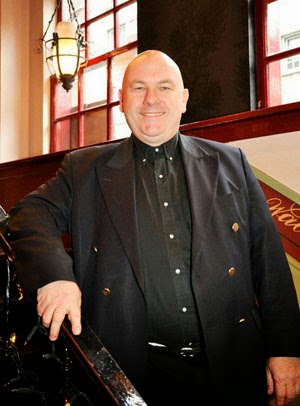
Dave Nelder's show Scotland's Referend...uhm? (Laughing Horse @ The Counting House, Monday 11/08/14) was a lightly enjoyable morning show. Not uproariously funny, but since when is comedy just about laugh count? Nelder is a self-styled Gladstonian liberal - isn't Scotland unique in its ability to generate such political affiliations? His other evening show was based on Voltaire's Candide, which we couldn't quite fit in. He had an excellent gag about reintroducing the Merk, Scotland's pre-Union currency, inaugurated around 600AD - which paid off in reference to German economic aid... Staunch feminist and humanist Kate Smurthwaite's The Evolution will Be Televised (Ciao Roma, Monday 11/08/14) was similar in effect, with a larger audience, seemingly comprised of scientific boffins with more knowledge in the noggin than I have on matters Darwinian.
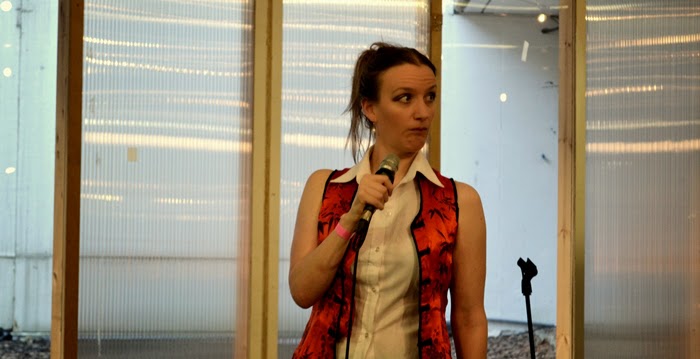

The very last show we saw was Andrew Watts' Feminism for Chaps (Laughing Horse @ The Counting House, Tuesday 12/08/14). Watts resembled a forty-something Jonathan Meades: suit and tie, distinctly RP tones. He was somewhat less acerbic, but pretty much as intelligent as that great TV fusionist of the lecture hall and the music hall. His 'chaps' guide' to feminism deftly educated on the variety of divergent feminisms and indulged in a sense of the absurd and numerous cricket metaphors. The juxtaposition of his patrician, gentlemanly style with the content made for an enjoyably fresh and thoughtful perspective on the subject. Observations of how men are treated in maternity wards mingled with discussions of feminist porn. A wonderful scene was conjured of Watts on a Feminist march in London, being photographed 'cringing' while Kate Smurthwaite was shouting "WHAT DO WE WANT!?" into a megaphone just behind him and there was the most brilliant story to invoke Penfold from Danger Mouse I'd heard all Fringe.
Another PBH Free Fringe show was Pornography and Heartbreak from American slam poet David Lee Morgan (Banshee Labyrinth, Sunday 10/08/14). This explored the sexual psyche - and all the darker irrationality entailed. I'd seen Morgan in 2013, with a much 'lighter' show that distilled his beat-influenced communism. This was intense and compelling; not all shows have to be easily accessible and such truth-telling isn't always going to 'please'. Nor should it.

We frequented the spoken word-specialist part of the Banshee Labyrinth: the 'Banqueting Hall', an excellent little room that is anything but its name - its many free shows are both economical and mind-expanding. You can try out free comedy and spoken word shows with no upfront cost and then pay a fiver or so if it is enjoyed. One we actually wandered into by mistake, looking for Chris Boyd's Ben Target-directed show: 300 to 1 (Banshee Labyrinth, Sunday 10/08/14). This featured poet Matt Panesh playing a teenage boy in his bedroom performing the action film absurdity 300 - while watched by the ghosts of Wilfred Owen and Siegfried Sassoon. A properly odd Fringe show, with Panesh an imposing physical performer, in a show that emitted wisdom as the Edinburgh skies were about to emit great quantities of certain other stuff that day...
On our last day, we had been looking to see The Philosorap Cabaret, but that wasn't on, so we just moved rooms in the BL and saw a compilation show of spoken-word; all really engaging, ranging from onomatopoeiac travel pieces to reflections on Buddhism to words from the Mancunian Zach Roddis, with his inventories of mundane, banal details and assaults on facile cultural clichés:

Grave Invaders (Banshee Labyrinth, Friday 08/08/14) was a 'slam poetry' performance, consisting of three poets with differing yet dovetailing styles: Mark Grist, MC Mixy and Tim Clare. It was loosely based on the premise of a road trip visiting the graves of dead poets, but largely was a showcase for their styles and flow; a mix of the acerbic, bawdy, heartfelt and debunking. There were some excellent puns. There were also deft parodies.
Clare's 'Portishead' assailed not the excellent band but the limited, Tory mindset of the south western town in which he was born in 1981. Grist had a humanist, illusion-less poem about the 'perfect marriage'. The show ended with an agreeably silly 'poets' death match', with the three dressed as a winged man-bee type thing, a 'space unicorn' and a hapless maths teacher.
Shows not enjoyed? Pointless to dwell at much length, but our first was a very mild stand-up show in the Sportsters bar that at least didn't last over half an hour. I didn't take to the storytelling show in the Banshee Labyrinth, Rebranding Beelzebub; just not imposing or original enough. Will be enjoyed by those literally into anything Gothic, but I found the tales and the delivery monotonous; inexorable in the wrong sense. I had perhaps hoped for something surreal and weird in Shakespeare's Avengers Assembleth (Greenside Royal Terrace, Saturday 09/08/14), but it was merely predictable am-dram panto. Some of the actors were broad, others were frothing at the mouth ham-dram. I'm not 'AVING A GO really, as there are far more deserving candidates for vitriol among the most popular comedians. SAA was fundamentally harmless - provided it isn't the only sort of theatre the audience ever thinks to see.
Nothing I saw this year was anywhere near as bad as a non-PBH Free Fringe free show of two years ago, with several comics on the bill 'essaying' a rancid, outmoded strain of humour - aggression, misogyny, homophobia; irony less (not that that's a way-out, Mr Carr & Co.).
I don't like gongs, baubles and awards for the arts... Yet, here's an exclusive 'TOP FIVE SHOWS OF THE EDINBURGH FRINGE 2014'!
5: Hooray for Ben Target! (Banshee Labyrinth, Saturday 09/08/14)

"Hey, easy, asbestos fingers!"
I saw Ben Target (pronounced 'TAR-ZHAY')'s last Fringe show in 2012, which was a revelation to me in how it played with conventions and barriers between audience and performer. And, in its sheer hilarious, unhinged absurdity. This was almost as good, and similarly Dadaist in its free-form splicing of different registers and comedic styles. He presented a fictitious (?) slideshow about his ancestors and grandfather. He had the whole audience assist in making a virtual 'cake'. He had us jumping to the strains of Van Halen in tribute to the 'death' of the band's bassist. Later, Target instructed us to throw our right shoes at him, while he was standing in front of an archery target. Then he produced a riot shield to fend off the flying footwear and finally collated the shoes in a bag and walked off.
4: Free Gaza (Gilded Balloon, Tuesday 12/08/14)

"I thought it was something about a footballer..."
Edinburgh in August can be an education in politics, humour and inform your cultural capital - or sense of yourself, who you are and what you like. Your habitus, in Pierre Bourdieu's terms. Edinburgh might give the discerning 'left-liberal' personality a sense that a lot more is possible, politically and culturally, than might seem to be the case in non-Fringe everyday life.
This was a heartening show; arranged at short notice by the Jewish Socialists' Group and with probably the largest crowd of the 25 shows we saw. All four comedians on the bill had different styles, yet it converged into conveying a humanist message. The Peace Bloc in Israel was alluded to. Money was collected at the end. Josie Long was sparky and charming. Andy Zaltzman was pointed and irreverent and unafraid to be arcane: "You've come a long way for a Graham Gooch". He was just the right side of mainstream. Chris Coltrane, who oddly resembled a work colleague of mine, was a righteous, bald-headed, left-wing activist comedian. He mined the absurdity of how police deal with demos against UK Uncut, and spoke from personal experience.
Then, for Daniel Kitson. A seemingly effortless stand-up style; bantering but with an underlying intellect and comic judiciousness. Like a more rapid fire Trevor Lock, he made comedy from his interactions with the audience and produced a rich humour from the deliberately avoiding mention of the political reason we were here. This was a sort of demonstration of what it is about to be human: not monolithically fixated, but interacting. Trying things out. Improvising. All the better to respond to complex situations - such as Gaza is.
There was even a Leith pun, relating to the decline of their Docks.
3: A Slight Ache (Pleasance That, Monday 11/08/14)

"You could call the police and have him removed. You could say that he's a public nuisance. Although I can't say I find him a public nuisance..."
Tremendous to see Pinter staged, and played with such vigour and understanding. I've seen his work staged just once in Newcastle at the Gulbenkian (now Northern Stage) in 2001: those not living in London don't often get the chance to see the Hackney playwright's comedies of menace. This is an intriguing radio play - staged as a wonderfully absurd sexual power struggle and satire of middle-class pretensions. What it loses in utter bizarre ambiguity, it gains in humour, with Munnery's corporeal presence and inscrutable gaze as the balaclavaed 'match-seller'. Catriona Knox is Vivien Merchant-esque in suggesting reserves of strength and sensuality beneath Flora's seeming primness and Thom Tuck is a megalithically pompous Edward. I had recently watched the 1970s TV version of No Man's Land, and this is similarly evocative in its writing: cricket as perennial exophoric reference, language as chief tool for human dueling. It increasingly strikes me that Pinter is equally and subtly concerned with politics, language and anthropology and shows their inter-relations within a contested culture.
Edward's speech about surveying the local land with a telescope suggests the desire for 'mastery', 'ownership' and the 'rational'. So much else suggests a focus on physical territory and the human concept of property: so embedded in British culture, law and politics since John Locke. Wonderful stuff this play, and I haven't even got to the 'Barnabus' scene!
2: Lippy (Traverse, Saturday 10/08/14)

"It takes more than rooms and chairs to make a home..."
My favourite theatre show of 2012 was the participatory and political piece about the Covent Garden Old Price Riots of 1809: Kemble's Riot. In 2013, it was was the inventive, physical and auditory spectacle of The Secret Agent, incisively adapting Joseph Conrad.
This year, I'd tried to book for several things at the Traverse - but too late, and with no luck. Other than this Dead Centre production, which was directed by Ben Kidd - who I later realised was behind Headlong's excellent production of Spring Awakening, which I had seen at Northern Stage earlier this year (and mentioned towards the end of my last piece here).
Like Spring Awakening and the work of Dennis Potter and David Lynch, there was an enveloping use of music: as something which beguiles and haunts, in equal measure. The end-section - with its Joycean dialogue emitted from a Beckettian mouth - was somewhat too conventionally modernist, in contrast with the rest of the play. It opens with a funny 'post-show discussion' that circuitously and deftly introduces the play's themes of lip-reading and the incommunicable. Then it shifts into 'depicting' the unimaginable circumstances surrounding four Irish women's decision to starve themselves to death, barricaded in their Leixlip home and erasing all traces of their identities. This was a news-story from 2000 - and the play makes clear the difficulties associated with finding meaning in such an act with limited 'evidence' on hand.
There is barely any discernible dialogue, for the most part. And that is vital.
This experimental production will necessarily divide critics and spectators: isn't that rather better than bland consensus? I certainly prefer theatre to challenge ideas of life and the world and make use of unusual staging techniques and, most of all, sound, in order to do that. Rather than be some pleasant 'pastime' viewed from behind the proscenium arch and thoroughly compartmentalized. The place 'to be' to keep up social appearances? Or a place to shape your world? Is it merely all about nice dialogue and 'life-like' acting? Or stage craft to fashion 'fantasies' or expose 'realities'?
Gilbert Adair's piece on Tom Stoppard's play Travesties (1974) in Myths and Memories comes to mind. As does the thought of such productions from before my birth as the Theatre Workshop's Uranium 235 (1946) and David Edgar's Destiny (1976).
This production troubled me and made me think, and was brave enough to offer no answers or definitive, didactic interpretation of the Mulrooneys' hauntingly inconclusive story.
1: Nathan Penlington - Choose Your Own Documentary (Gilded Balloon, Monday 11/08/2014)

I won't say too much on this, other than the imperative: go and see it. This has deep pathos and is uplifting like you wouldn't think possible. It demonstrates the need for fictions, myths and stories as well as Jonathan Gottschall or Joseph Campbell. It is innovative and interactive, in a way deeply relevant to the heart of the show. And, yes, there is the heart that we need.


